



 08:45 2026-02-13
The Earth is a great illusionist. It creates spectacles that seem to break physical laws. Rare optical effects, eternal storms, red ice—these are not scenes from science fiction. They are real terrestrial processes where science meets magic. Such phenomena are rare and ephemeral. They require a precise mix of altitude, cold, chemistry, or geology. While nature shows its secret craft, science supplies the key to explanation.
 699
699 7
7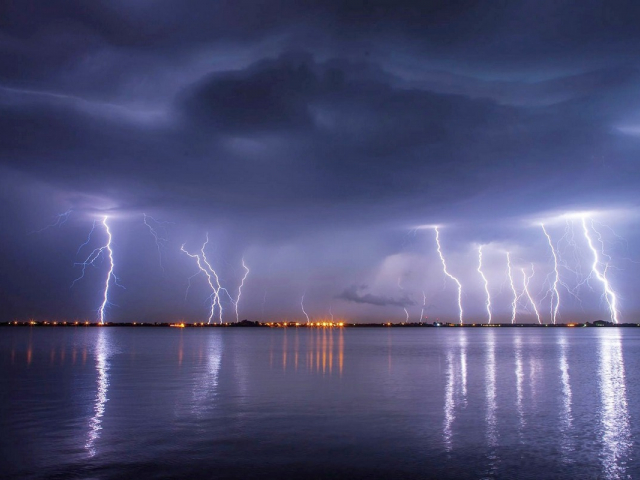
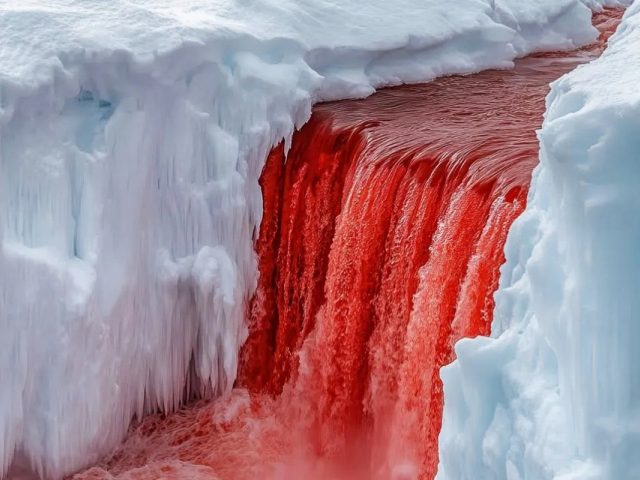
Antarctic Blood Falls — red stream from glacier
Blood Falls in Taylor Valley is not blood. It is hypersaline brine seeping from a glacier and rich in iron oxide. An ancient lake has been trapped under the ice for about two million years. The water is loaded with sulfates and iron. When iron contacts air, it oxidizes and turns rust‑red. The red cascade is also a window into extreme life. Microorganisms live in the brine and respire sulfates without oxygen. Researchers first reported the feature in 1911, and scientists only recently solved the chemical mystery of its color.
Catatumbo lightning — where nature forgot to switch off lights
At the mouth of the Catatumbo River into Lake Maracaibo, near Venezuela, storms rage almost continuously. Lightning strikes there on up to 280 nights a year and can reach 10,000 strikes in a single night. Warm, humid air from the Caribbean collides with cold mountain winds from the Andes, creating near‑perfect conditions for cloud electrification. The flashes are often distant and almost silent, but they light the sky continuously. The region produces more ozone than any other place on Earth.
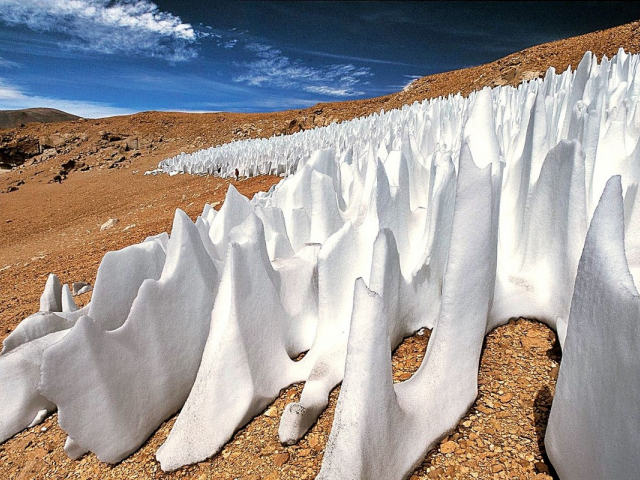
Penitentes — army of icy penitent monks
At altitudes above 4,000 meters in the high Andes and Himalayas, snow turns into thousands of sharp ice spikes that resemble hooded monks. The formations stand from one to five meters tall and look surreal, as if an army froze mid‑prayer. Penitentes form by sublimation. Sunlight turns ice directly into vapor, while shadows between the blades preserve cold. The structures complicate mountaineering and accelerate glacier retreat. Penitentes illustrate what dry, cold, and intense ultraviolet radiation can sculpt.
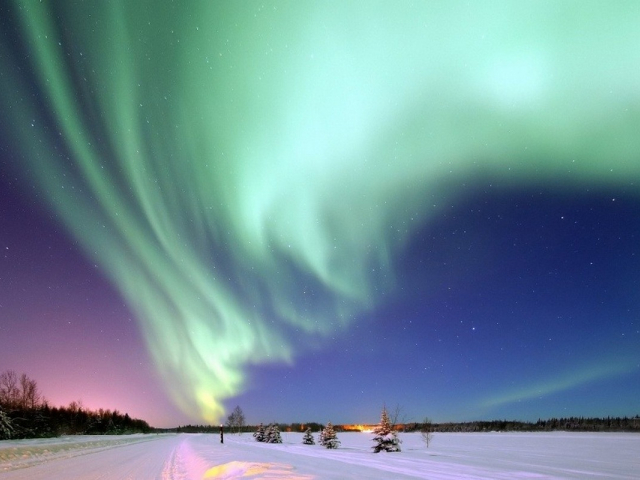
Aurora borealis — sky’s charged‑particle dance
The aurora borealis is a giant plasma performance. Charged particles from the solar wind hit the Earth’s magnetosphere and collide with atmospheric gases. Oxygen produces green and red light. Nitrogen produces violet and blue light. The aurora brightens during geomagnetic storms when the Sun emits especially strong streams. The best viewing is in Norway, Iceland, and Alaska, where long winter nights and low light pollution reveal crowns, ribbons, and spirals.
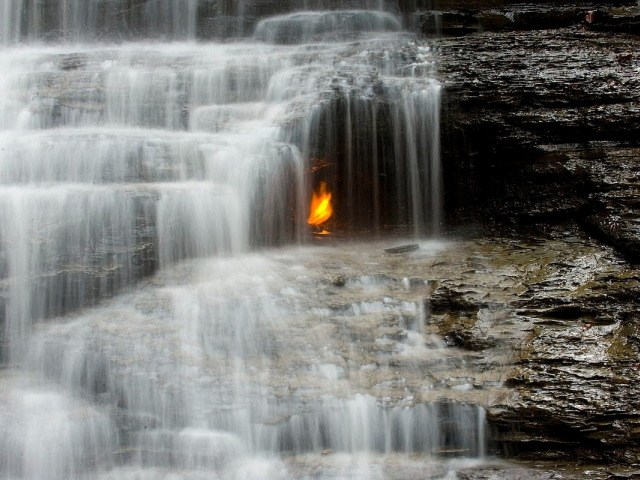
Eternal flame behind waterfall — fire that will not be drowned
At Chestnut Ridge Park in New York, behind a ten‑meter waterfall called Eternal Flame Falls, a small natural gas flame burns. The flame reaches roughly 20 centimeters and has burned for centuries. Methane seeps through shale fissures and ignites naturally or from ancient sparks. Water does not extinguish the flame because a rock alcove shields it from the cascade. This rare meeting of fire and water occurs when geological gas encounters flowing water. Indigenous people regarded the spot as sacred.
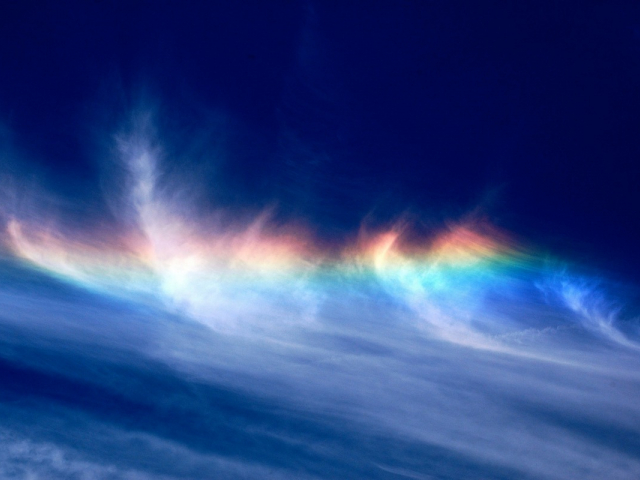
Fire rainbow — flame in sky without combustion
A circumhorizontal arc is a bright horizontal band of colors seen under the sun when it stands higher than 58 degrees above the horizon. Sunlight refracts through flat, hexagonal ice crystals in cirrus clouds and produces a spectrum with red on top. It is not a rainbow, and it is not fire. It is an atmospheric optical phenomenon. The display lasts minutes and requires precise crystal alignment. It appears most often in summer over the United States, Canada, and Europe. A fire rainbow convinces the viewer of magic: the sky suddenly seems to blaze as if someone poured liquid fire.
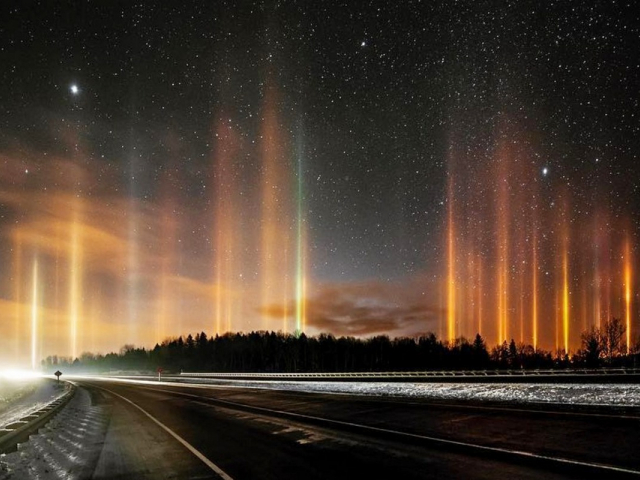
Light pillars — vertical beams from nowhere
Light pillars are optical columns that rise from or descend into a light source. Flat ice crystals in the air reflect light from streetlamps, the moon, or the sun to create the effect. In extreme cold, they give the illusion that the sky is pierced by vertical light blades. Pillars occur most often in polar regions or when the air contains many particles. The phenomenon can be triggered by artificial light, yet it looks supernatural. Light pillars turn an ordinary night into a cosmic spectacle.


-
Grand Choice
Contest by
InstaForexInstaForex always strives to help you
fulfill your biggest dreams.JOIN CONTEST -
Chancy DepositDeposit your account with $3,000 and get $1000 more!
In April we raffle $1000 within the Chancy Deposit campaign!
Get a chance to win by depositing $3,000 to a trading account. Having fulfilled this condition, you become a campaign participant.JOIN CONTEST -
Trade Wise, Win DeviceTop up your account with at least $500, sign up for the contest, and get a chance to win mobile devices.JOIN CONTEST


